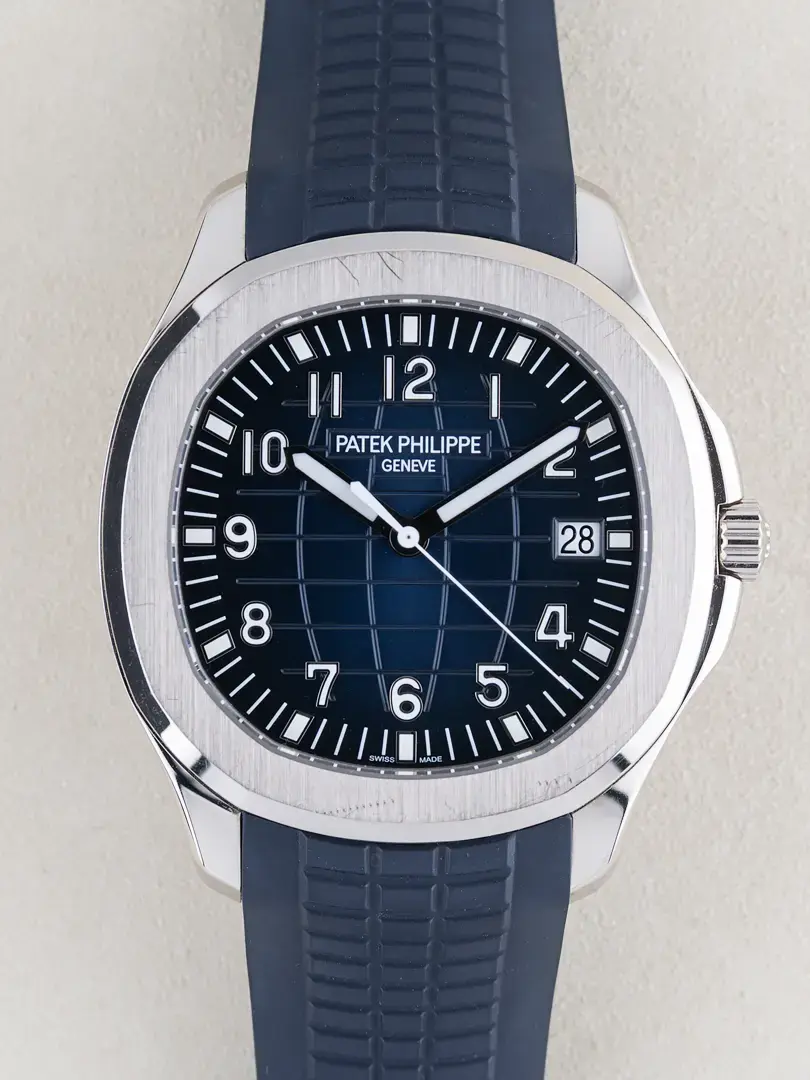
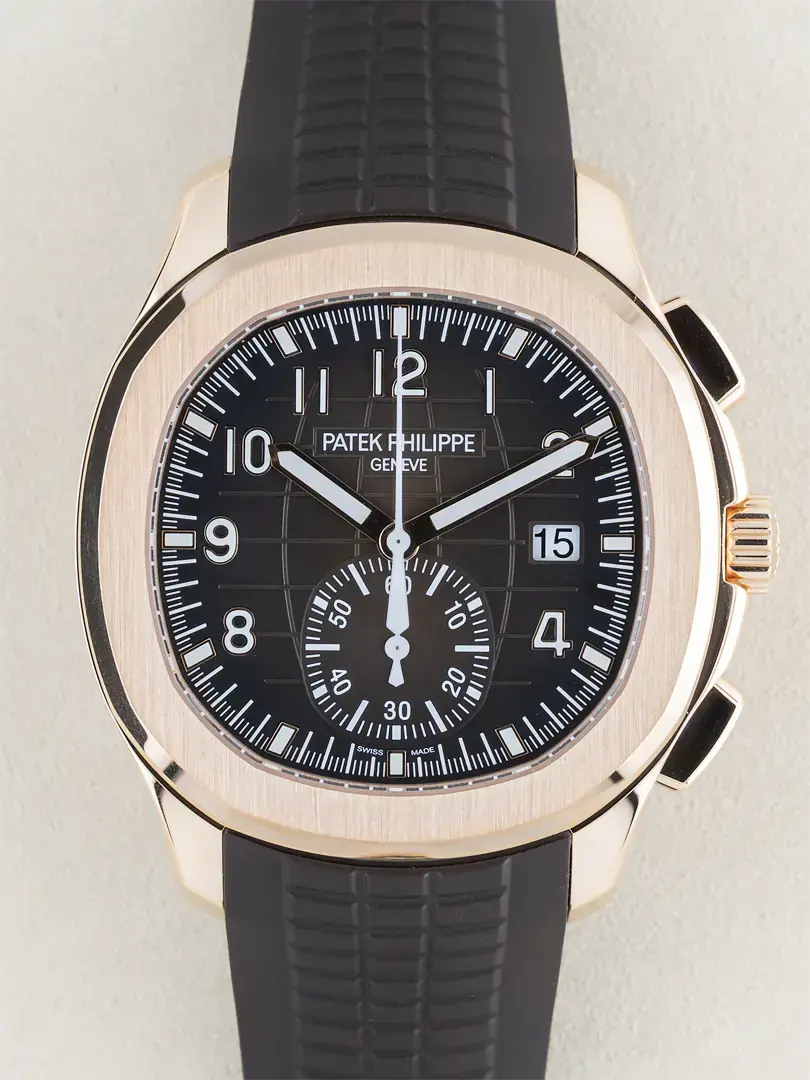
There’s a conversation that happens almost daily in Patek Philippe authorised dealerships around the world. A client walks in, asks about a steel Nautilus or an Aquanaut, and gets told, politely and with complete sincerity, that there is a waitlist. That the wait is measured in years, not months. That a meaningful purchase history with the dealer is usually a prerequisite before getting anywhere near an allocation for the watches everyone actually wants. And in some cases, that the waiting list isn’t even open to new names at all.
Patek Philippe produces somewhere around 60,000 watches per year. It’s one of the most prestigious watch brands on the planet. So you’d think access would be more straightforward. It isn’t, and understanding why is central to understanding the grey market and why buyers with serious intent increasingly use it.
Watch Avenue is a Sydney-based grey market dealer specialising in Patek Philippe watches. We source, authenticate, and sell genuine Patek timepieces outside the authorised dealer network, with no waitlist requirements, no client history games, and no uncertainty about what you’re getting. Every watch is authenticated before sale. Every sale comes with our dealer warranty.
Browse our current Patek Philippe collection below, and keep reading for an honest breakdown of the models, the market, and how the process actually works.
Patek Philippe’s collection is broader than most buyers initially expect, spanning simple dress watches through to some of the most technically complex timepieces made anywhere in the world. But in practical terms, most of the interest, most of the secondary market activity, and most of what we stock centres on three families: the Nautilus, the Aquanaut, and the Grand Complications. Here’s what you need to know.
The Nautilus is, without much debate, the watch that generates more secondary market activity and more collector obsession than any other Patek Philippe reference. It was designed by Gérald Genta in 1976, the same designer who created the Royal Oak four years earlier, and the brief was essentially the same: a steel sports watch priced at a level that the industry considered audacious. The original Nautilus (ref. 3700) launched at a price comparable to a gold dress watch of the era, which was genuinely shocking. Patek sold it anyway.
The design is built around a horizontally grooved dial and an integrated steel bracelet, with an octagonal bezel and rounded case edges that give it a porthole quality. The Nautilus horizontal line motif on the dial catches light differently depending on the viewing angle, which sounds like a minor thing until you see it in person, at which point it’s pretty obviously one of the most refined dial treatments in watchmaking.
Here’s a breakdown of the key references and what distinguishes them from each other.
Nautilus 5711 (discontinued, 40mm): The 5711 is the reference that defined the modern Nautilus era. When Patek discontinued it in 2021, the secondary market responded immediately. Steel references now consistently trade at prices well above their original retail, and particular dial variants command extraordinary premiums. The final Tiffany Blue edition (ref. 5711/1A-018), limited to 170 pieces, is one of the most talked-about watch auction results in recent memory. The 5711 ran on the calibre 324 SC and was available in a blue dial as the primary configuration, with various special editions and olive green and white dial variants across its production life. Finding a 5711 today means working the secondary market, and that’s exactly where we operate.
Nautilus 5811 (current production, 41mm): The 5811 is the 5711’s successor in the current lineup, stepping up from 40mm to 41mm and running on the updated calibre 26-330 S C. The case architecture returns to a two-part construction that nods to the original 3700, and the launch configuration in white gold with a blue-to-black sunburst dial established its credentials immediately. Available in white gold as the current flagship configuration, with additional materials and dial variants entering the lineup over time. Secondary market pricing for the 5811 reflects both the reference’s relative recency and the sustained demand that follows every Nautilus regardless of generation.
Nautilus 5712 (41mm, moonphase): The 5712 adds a moonphase display, a date subdial, and a power reserve indicator to the standard three-hand Nautilus layout, producing an asymmetrical dial that’s one of the most visually interesting in the collection. The off-centre layout works because of the thought that’s gone into where each complication sits relative to the others, which sounds obvious but is actually quite hard to pull off without the dial feeling cluttered. Available in steel, rose gold, and two-tone configurations on bracelet or strap. This is the reference for buyers who want genuine complication in the Nautilus without going to perpetual calendar territory.
Nautilus 5726 (annual calendar, 40.5mm): The 5726 adds an annual calendar to the Nautilus, displaying day, date, month, and a moonphase in a layout that manages to fit a meaningful amount of information without overwhelming the dial. An annual calendar requires just one manual correction per year, at the end of February, which makes it genuinely practical in a way that full perpetual calendar references sometimes aren’t. Available in steel (ref. 5726A), white gold, and rose gold. The steel reference has attracted significant secondary market interest.
Nautilus 5980 (flyback chronograph, 40.5mm): The 5980 is the chronograph variant of the Nautilus family, running on the calibre CH 28-520 C flyback movement, which means the chronograph hand can be reset and restarted with a single pusher action rather than the stop-reset-start sequence of a conventional chronograph. It’s a practical improvement for anyone who actually uses the timing function. The 5980 runs at 40.5mm and has been produced in steel, rose gold, and two-tone configurations. The steel reference (5980/1A) is the most actively traded on the secondary market.
Nautilus 5990 (travel time flyback chronograph, 40.5mm): The 5990 adds dual time zone functionality to the flyback chronograph of the 5980, making it simultaneously the most practically complicated watch in the Nautilus line and the one that arguably makes the most sense for regular travellers. Available in steel, rose gold, and various gold configurations.
Nautilus 5740 (perpetual calendar, white gold): The 5740 is the most complex watch in the Nautilus collection, housing a full perpetual calendar movement, the calibre 240 Q, in the recognisable case. White gold only, which positions this as a prestige complication piece rather than a sporting daily wearer. Produced in limited quantities and consistently difficult to source through any channel.
The Aquanaut was introduced in 1997 as something more relaxed and contemporary than the Nautilus, sharing the same rounded octagonal case concept but with a composite rubber strap replacing the integrated metal bracelet and a distinctive embossed grid-pattern dial replacing the Nautilus horizontal motif. It was positioned from the beginning as a younger, sportier proposition, and for a long time it sat in the Nautilus’s shadow.
That changed. The Aquanaut has become one of Patek’s most sought-after collections in its own right, with steel references consistently trading well above retail on the secondary market and collector interest tracking closely behind the Nautilus in terms of intensity. The “poor man’s Nautilus” framing that used to get applied to it is worth approximately nothing at current prices.
Aquanaut 5167 (time and date, 40mm): The standard three-hand Aquanaut is the entry point to the collection and the reference that appears most frequently in our stock. Running on the calibre 324 SC, it’s available in steel with a black or grey embossed dial (ref. 5167A), and in rose gold with a brown dial (ref. 5167R). The rubber composite strap is unique to this watch, and it gives the Aquanaut a wearability and comfort advantage over the metal bracelet Nautilus for casual daily wear.
Aquanaut 5168 (40mm, gold): The 5168 steps up to 18k gold construction, available in white gold and rose gold configurations, typically with more elaborate dial treatments. The larger case proportions and precious metal execution give this reference a different character to the steel 5167.
Aquanaut 5164 (travel time, 40.8mm): The Travel Time Aquanaut adds a dual time zone complication via the calibre 324 S C FUS, with a local time correction system operated by pushers at two and four o’clock. This is the functionally practical complication reference in the Aquanaut line, available in steel with black dial.
Aquanaut 5968 (chronograph, 42mm): Introduced in 2018, the 5968 is the Aquanaut chronograph and runs the calibre CH 28-520 C on a slightly larger 42mm case. The orange accents on the original steel version made it deliberately bold for a Patek Philippe, and secondary market demand for the 5968A has been strong since its release. Rose gold versions have also appeared, including the ref. 5968R with a brown dial that we’ve stocked.
The Calatrava is Patek Philippe’s foundational dress watch collection, in production since 1932 and the reference point for what a round, simple, beautifully finished dress watch looks like. The name comes from the cross of the Order of Calatrava, a medieval Spanish military order, and that cross forms part of Patek’s logo.
Where the Nautilus and Aquanaut attract buyers who want a sports-inflected luxury watch, the Calatrava attracts buyers who want exactly the opposite: a clean, round case, a simple dial, a leather strap, and no complications beyond what’s necessary. The current Calatrava lineup covers several references across different case sizes, from more modest proportions through to the Calatrava 5227 at 39mm, which is the modern standard bearer of the collection.
Calatrava pricing on the secondary market is generally more accessible than the sports references, and precious metal Calatravi in white or yellow gold can sometimes be found at pricing that represents genuine value relative to retail, given the softer demand dynamics. For buyers who understand what they’re getting, a beautifully finished gold Calatrava at a sensible grey market price is one of the more underrated propositions in the upper end of the watch market.
The Grand Complications collection is where Patek Philippe does things that very few watch companies on earth are capable of doing. These are watches carrying combinations of perpetual calendars, minute repeaters, chronographs, split-seconds, celestial displays, and other complications that require extraordinary movement architecture and finishing to execute correctly.
Perpetual Calendar Chronograph 5270: The 5270 combines a perpetual calendar with a chronograph in a 41mm case, which is the kind of combination that historically required very large case diameters to accommodate both movements. Patek has managed it at a contemporary size. The current references include various precious metal configurations, with the platinum green dial version (ref. 5270P-014) being among the more visually striking executions we’ve had in stock. Running on the calibre CH 29-535 PS Q, this is one of the most respected complications in Patek’s current production catalogue.
Minute Repeater references: A minute repeater chimes the time on demand using small hammers striking gongs. It’s one of the most technically demanding complications to produce because the acoustics, the timing of the striking mechanism, and the feel of the activation slide all need to work together precisely, and there’s nowhere to hide a poorly executed repeater. Patek’s minute repeater references represent the very highest level of what the brand produces, and they appear occasionally in the secondary market with pricing that reflects both their scarcity and their complexity.
Annual Calendar 5396 and 5396R: The annual calendar references in the Complications collection sit below the perpetual calendar in technical complexity but above the standard three-hand watch in what they offer the wearer. An annual calendar displays day, date, and month and automatically accounts for months of different lengths, requiring just one correction per year at the end of February. Available in white gold, rose gold, and yellow gold.
The Cubitus was introduced in 2024 as Patek Philippe’s newest family addition and its most architecturally contemporary case shape in decades. The square-to-round cushion case with an integrated bracelet is a genuinely different design direction for a brand where the Nautilus and Calatrava have defined the visual language for so long.
It’s early days for secondary market positioning on the Cubitus, and collector opinion remains divided, which is often the case when an established brand introduces something genuinely new. The references launched across steel and white gold configurations. Worth watching as the collection develops, and worth considering for buyers who want something from Patek that most people won’t immediately identify.
The access problem with Patek Philippe is arguably more severe than with any other brand in the watch industry. The numbers are clear: around 60,000 watches are produced per year for global demand that comfortably outstrips that. The most desirable steel sports references, primarily Nautilus and Aquanaut, have waitlists at authorised dealers that are measured in years and in some cases effectively don’t exist for new clients at all.
Here’s the frank picture of why the grey market is the practical route to most of the watches people actually want.
The waitlist situation is genuinely extreme. The 5711 is discontinued and no longer available through authorised channels at all. For current Nautilus references, new clients at authorised dealers are typically looking at waiting periods that make the Rolex situation look manageable by comparison. Some sources report waitlists of up to a decade for the most demanded references at certain dealers. And why would they rush? They’re selling every watch they receive regardless. The grey market exists precisely because legitimate demand significantly exceeds what authorised channels can supply on any reasonable timeline.
The discontinuation of the 5711 created a permanent secondary market reality. When Patek Philippe discontinued the steel 5711 in 2021, they didn’t create a replacement at the same price point in the same material. The 5811 launched in white gold, not steel, at a higher price point. The 5711 in steel immediately became a secondary-market-only proposition, and pricing responded accordingly. Steel 5711 references currently trade at substantial premiums reflecting both the discontinuation and the ongoing demand for what remains the most iconic Patek Philippe reference of its generation. Accessing a steel 5711 today means buying in the secondary market, full stop.
Grey market access covers the full breadth of Patek’s production. An authorised dealer sells only current production. The grey market spans current references, recently discontinued references, pre-owned examples in varying conditions, limited editions, and boutique-specific references that were never broadly distributed. For a collector who wants a specific dial variant of a specific reference from a specific year, the grey market is the only place to look.
Pricing on precious metal and complication references can represent genuine value. The secondary market premium dynamic works differently across different parts of the Patek range. Steel sports references trade above retail because of allocation-driven scarcity. Precious metal dress watches, Calatravi, certain complication references, and some Aquanaut gold configurations can appear at pricing that’s more moderate, and occasionally below retail, because the demand dynamics are different. This creates buying opportunities for buyers who understand the market well enough to identify them. We’re happy to walk through the pricing landscape on any specific reference before a client commits.
Every watch is authenticated before it reaches a client. The concern with any grey market purchase is authenticity, and with Patek Philippe in particular, the financial stakes of getting that wrong are significant. At Watch Avenue, every Patek that passes through our hands goes through a thorough authentication process before it’s listed or delivered. Serial numbers are verified, documentation is checked, and we stand behind every watch with our dealer warranty. Patek Philippe service centres service watches brought in through any channel, so servicing support isn’t affected by buying through a grey market dealer rather than an authorised one.
The relationship we offer is dealer accountability, not boutique gatekeeping. Authorised dealers and boutiques operate within a relationship model that’s deliberately structured to create dependency and purchase history. That’s fine as a business model, but it’s not a buying experience that works for most clients who want a specific watch in a reasonable timeframe. Our relationship with clients is built around finding them the watch they want, authenticating it properly, and providing after-sale support. That’s the proposition, and it’s a simpler and more direct one than what the authorised network offers to new clients for the most in-demand references.
Patek Philippe was founded in Geneva in 1839 by Antoine Norbert de Patek, a Polish watchmaker who had emigrated to Switzerland, and Jean Adrien Philippe, a French watchmaker whose invention of the keyless winding and setting mechanism had attracted international attention. The combination of Patek’s commercial instincts and Philippe’s technical innovation turned out to be a productive one, and the company established itself quickly among the most technically ambitious watch manufacturers in Geneva.
The brand’s early decades were defined by technical achievement. Patek Philippe made the world’s first Swiss wristwatch in 1868, a commissioned piece for the Countess Koscowicz of Hungary. The company developed the perpetual calendar wristwatch in the early twentieth century, long before complications of that complexity had been considered practical for a watch worn on the wrist. The reputation for grand complication watchmaking was built through this period and has never really left.
The Stern family acquired Patek Philippe in 1932, and the company has remained under Stern family ownership since. This matters more than it might initially seem. Four generations of family ownership means four generations of decisions made with a time horizon measured in decades rather than quarters, which in practice means consistent investment in manufacturing quality, controlled production volumes, and the kind of long-term brand management that public company shareholders would often not tolerate.
The Calatrava arrived in 1932, the same year as the Stern acquisition, establishing the design language for Patek’s dress watch line that persists to this day. The Nautilus came in 1976. The Aquanaut followed in 1997. And despite the brand’s long heritage, Patek Philippe continues to file more patents than almost any other Swiss watchmaker, which is not what you’d expect from a company that trades primarily on heritage. The movement engineering and finishing work across the current production range reflects a combination of historical depth and ongoing technical ambition that’s genuinely unusual even at the top of the industry.
The phrase most associated with the brand, about never truly owning a Patek Philippe but merely looking after it for the next generation, was a marketing line that worked because it reflected something real about how the watches are built and how they hold up over time. A Patek Philippe movement, serviced properly, will outlast the person who bought it. That’s not a marketing claim. That’s just what the watches are.
Are grey market Patek Philippe watches genuine?
Yes. Grey market means sold outside the authorised dealer network, not counterfeit. These are the same authentic watches that come from Patek Philippe’s manufacture in Geneva; the only difference is the sales channel. At Watch Avenue, every Patek that we sell goes through authentication before it reaches a client. Serial numbers are verified against documentation, movement and case details are checked, and we stand behind every watch with our dealer warranty. Patek Philippe service centres service watches regardless of how they were purchased, so there’s no downstream implication for the watch’s serviceability.
Why is a steel Nautilus so hard to find and so expensive?
The steel Nautilus situation is a function of a genuine supply-demand imbalance that Patek Philippe has not resolved and, arguably, has no strong incentive to resolve. The brand produces limited quantities deliberately, authorised dealers allocate the vast majority of supply to established clients, and new buyers face waitlists that in many cases are effectively closed. The discontinuation of the 5711 in 2021 compressed supply further by removing the most widely recognised steel Nautilus from current production without replacing it with an equivalent steel reference. The 5811 launched in white gold. So the steel Nautilus now exists only in the secondary market, and prices reflect what happens when a discontinued iconic reference faces sustained collector demand. The grey market is the only practical route to these watches.
What’s the difference between the Nautilus and the Aquanaut?
Design-wise, the Nautilus runs on an integrated metal bracelet with a horizontally grooved dial, while the Aquanaut uses a composite rubber strap and an embossed grid-pattern dial. The Nautilus is the older, more heritage-laden reference and tends to carry higher secondary market premiums, particularly in steel. The Aquanaut was positioned as the more casual, contemporary option and has developed significant collector interest in its own right over the past several years. In practical terms, the Aquanaut is often more comfortable for daily wear, given the rubber strap, and steel Aquanaut references, while still trading above retail on the secondary market, typically sit at lower premiums than the equivalent Nautilus references. For a first-time Patek buyer who wants a sports reference and is working within a budget, the Aquanaut often makes more practical sense than trying to access a Nautilus.
Do Patek Philippe watches hold their value?
Steel sports references, particularly the Nautilus and Aquanaut, have historically maintained and often significantly appreciated in value. Steel Nautilus 5711 references now trade at premiums well above their original retail price, driven by discontinuation and sustained collector demand. Steel Aquanaut 5167 references have also shown consistent above-retail secondary market pricing. Dress watches like the Calatrava, and precious metal references across the range, hold value more moderately and typically depreciate below retail in the short term, with appreciation happening over longer horizons for well-preserved examples. Specific dial variants, limited editions, and complete box-and-papers examples consistently perform better than watches missing their original documentation. We’re happy to provide a reference-by-reference assessment before any purchase.
Can I sell or trade my Patek Philippe through Watch Avenue?
Yes. We buy Patek Philippe watches outright and also handle trade-in transactions for clients who want to move into a different reference, a different complication, or a different brand entirely. Get in touch with the details and photos of your watch, and we’ll come back with a market-based valuation. If the number works, we move quickly. We also offer consignment for clients who prefer to hold out for retail-level pricing rather than accept an outright offer. Trading up from an Aquanaut 5167 into a Nautilus, or from a Nautilus time-and-date into the 5712 moonphase, is the kind of transaction we handle regularly, and combining the sale and purchase into a single process is usually simpler and more financially transparent than handling them separately.
Does Watch Avenue stock Patek Philippe references not shown on the website?
Yes. Our Patek inventory moves quickly, and some references sell before they make it onto the site. Beyond current stock, we also source specific references on request. If you’re looking for a particular Nautilus configuration, a specific Aquanaut dial variant, a Grand Complication reference, or something discontinued that requires sourcing from our dealer network, get in touch through our sourcing service. We can usually provide a timeline and indicative pricing within a few days, and for many references, we can turn around a sourced watch within one to two weeks.
Watch Avenue is a Sydney-based watch expert and advisor specialising in luxury pre-owned and grey-market watches. We work with clients across Australia to buy and sell high-end timepieces. Get in touch with the team to see how we can help you.